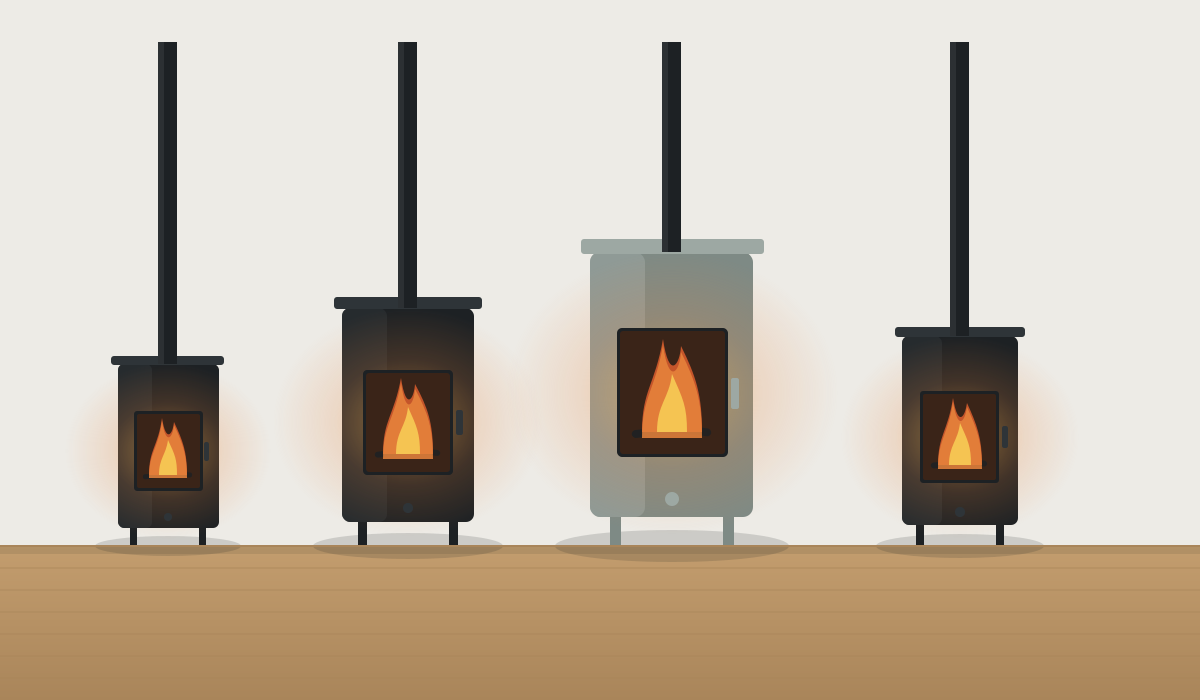
People walk in and ask for the biggest output they can afford. It feels like the safe choice. It is the opposite.
Oversizing makes a room worse
An overpowered stove in a modern, well-insulated Norwegian house cannot be run properly. The room gets too hot within twenty minutes, so the owner closes the air down to survive the evening. A throttled fire burns cool and dirty: the glass blackens, tar builds in the flue, and the appliance that was supposed to be beautiful spends the winter looking filthy.
Start instead from the space. As a working figure, allow roughly 60–80 watts per square metre in an ordinary insulated home. A 40 m² living room lands around 3 kW; a 70 m² open-plan floor around 5 kW. Older, draughtier houses need more; new low-energy builds need noticeably less.
The right stove is the one you can run wide open on an ordinary Tuesday in November.
Mass, not just output
Two appliances rated at the same kilowatts can behave completely differently. A thin steel stove heats the room fast and stops almost as fast. A soapstone or heavy cast iron body takes longer to come up but keeps radiating for hours after the fire dies.
Which you want depends on how you live. For a house occupied all day, mass wins. For a room used for a few hours in the evening, quick response is more useful. For a cabin, mass wins again — but that is its own conversation.
Read the efficiency figure, not the brochure
Every new appliance sold in Norway has to be clean-burning and tested against national emissions standards at an accredited laboratory. That is a floor, not a differentiator. What varies is real efficiency, and the honest way to compare it is the tested figure in the documentation rather than the adjective on the display card.
Then check whether it can actually be flued
This is where a showroom conversation should end and a survey should begin. Output, mass and looks are all irrelevant if the position you have in mind sits above a bathroom, below a ridge line, or on a wall that turns out to be structural.
- Chimney height and cross-section — must match the appliance, not the other way round.
- Combustion air — airtight modern houses need a dedicated supply.
- Clearances — set by the appliance's own manual, and non-negotiable.
- Floor loading — a soapstone body can weigh several hundred kilograms.
A short checklist
Before you commit to an appliance, you should be able to answer all five of these:
- How many square metres, and how well insulated?
- Occupied all day, or evenings only?
- Is there a usable flue, or does one have to be built?
- Is the house airtight enough to need an air duct?
- Who is filing the notification to the fire service afterwards?
If the person selling you the stove cannot answer the last three, they are selling you a product rather than an installation.